
FASTER POWER FROM GRID TO RACK
Are you facing challenges with grid connectivity? Grid integration is challenging, whether the substation is owned by you or the grid. Our turnkey substation solutions for data centers simplify integration and speed up power delivery from grid to rack.

Flexible Configurations
Integrate various types of power in either grid-tied or remote microgrid configuration through solutions and services for turnkey data center substation projects that can be as Engineered Equipment Packages (EEPs), Engineering, Procurement, and Construction (EPC) contracts.

Accelerate Grid Connectivity
With deep domain knowledge and expertise in data center substation projects, our data center solutions ensure streamlined, on-time, and on-budget project execution.
Reducing Carbon emissions
High-voltage SF6-free products aimed at decarbonizing the electrical grid and energy efficiency solutions to support the transition to sustainable data center operation.

Reliability and availability
Enhanced power reliability and availability on both sides of the meter through digital substation monitoring and real-time electrical network optimization using AI, machine learning, and digital twins.
Planning AI data center growth?
Download our white paper to uncover the grid infrastructure considerations, challenges, and fast-track substation strategies that reduce time to market.
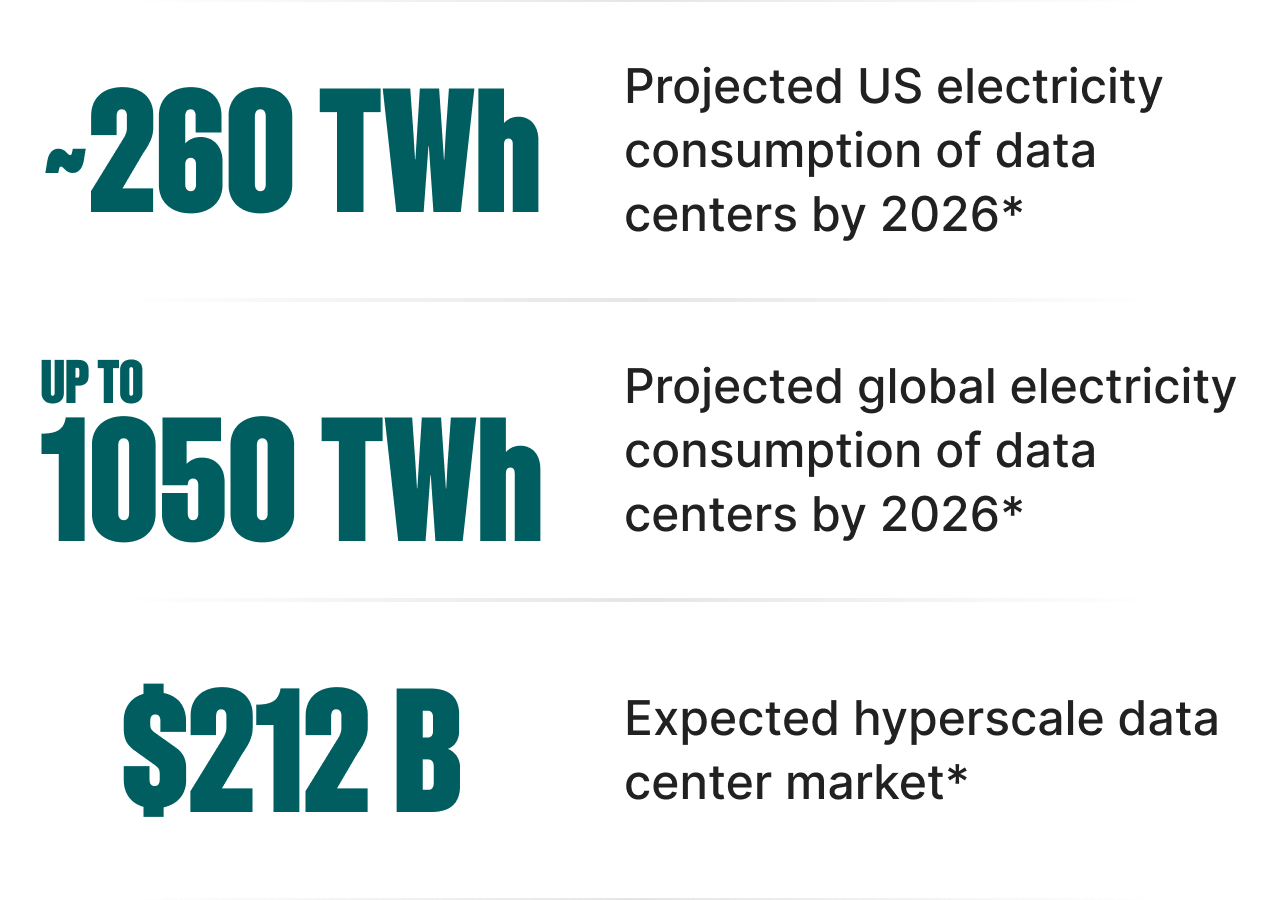
*Data from International Energy Agency



 Back
Back
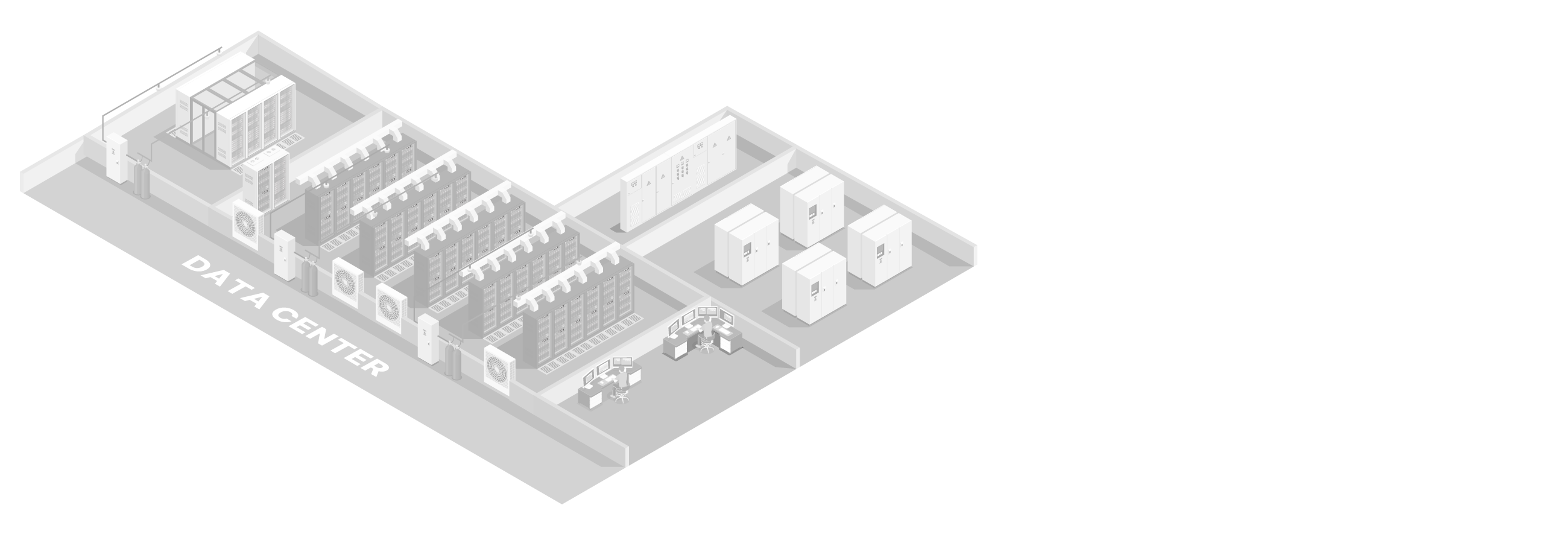
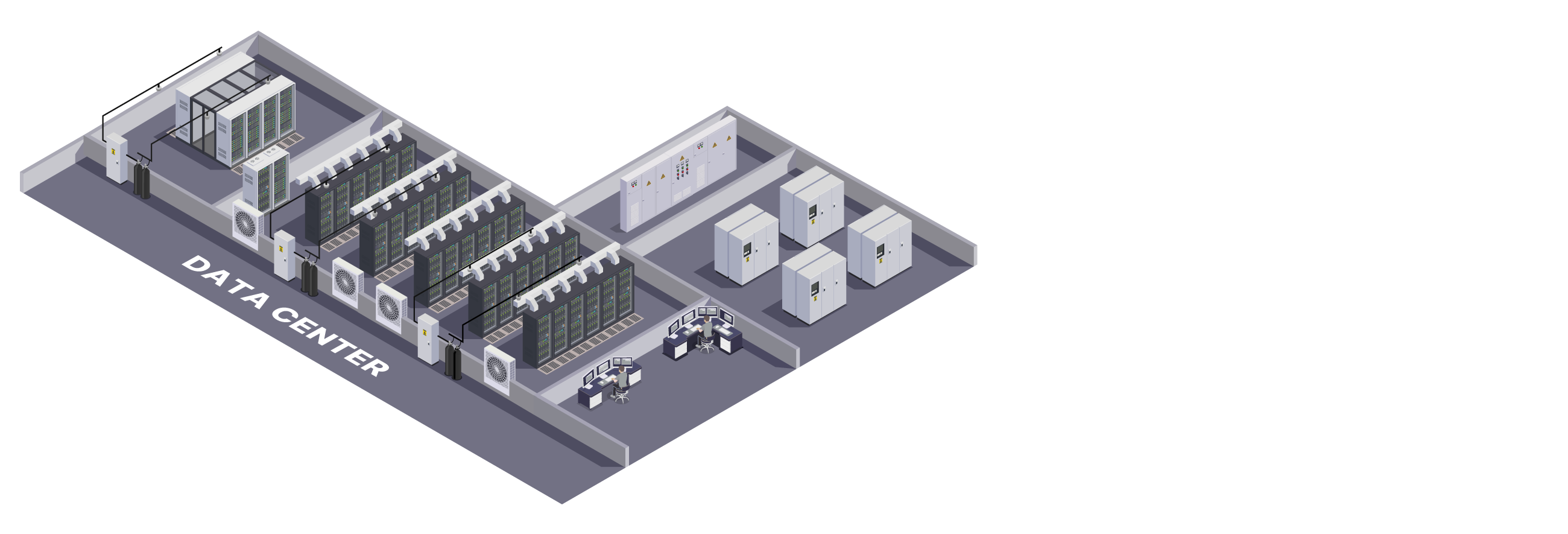
BEHIND-THE-METER
Back
Power Monitoring
Effective load management in grid-connected or islanded mode with our Advanced Automation Solutions, including Microgrid and Distributed Energy Resources (DER) management. Improve system stability and minimize downtime with the Fast Load Shedding solution.
Back
Energy Efficiency
Consolidate data from various source devices for real-time energy monitoring. Leverage advanced algorithms to enable real-time decision making and optimize energy management with our Energy Efficiency Software (EES).
Back
Motor Health Management
Increase availability of your cooling system with Electrical Signature Analysis (ESA) and Machine Learning algorithms, to provide early detection of abnormalities and avoid process disruption from critical failures of cooling motors by using the Motor Health Management solution.
Back
Data center Asset Performance
GE Vernova’s GridBeatsTM Energy Asset Performance Management (EnergyAPM) solution gives you complete visibility into asset health with predictive and prescriptive failure detection, enabling smarter, more efficient maintenance strategies.
Back
Digital Relays
Protect switchgear with our digital relays and reduce downtime with advanced diagnostics and predictive maintenance features. Our metering solutions improve power quality through cost-saving solutions like harmonics monitoring and voltage balance.
Back
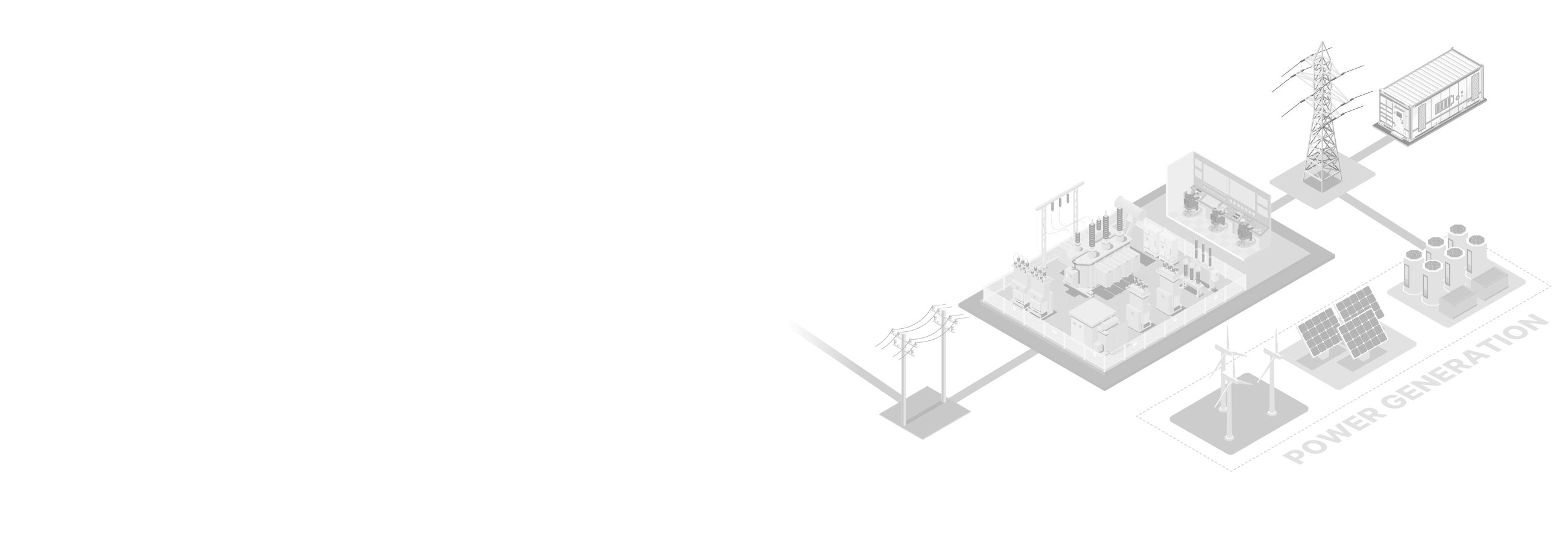
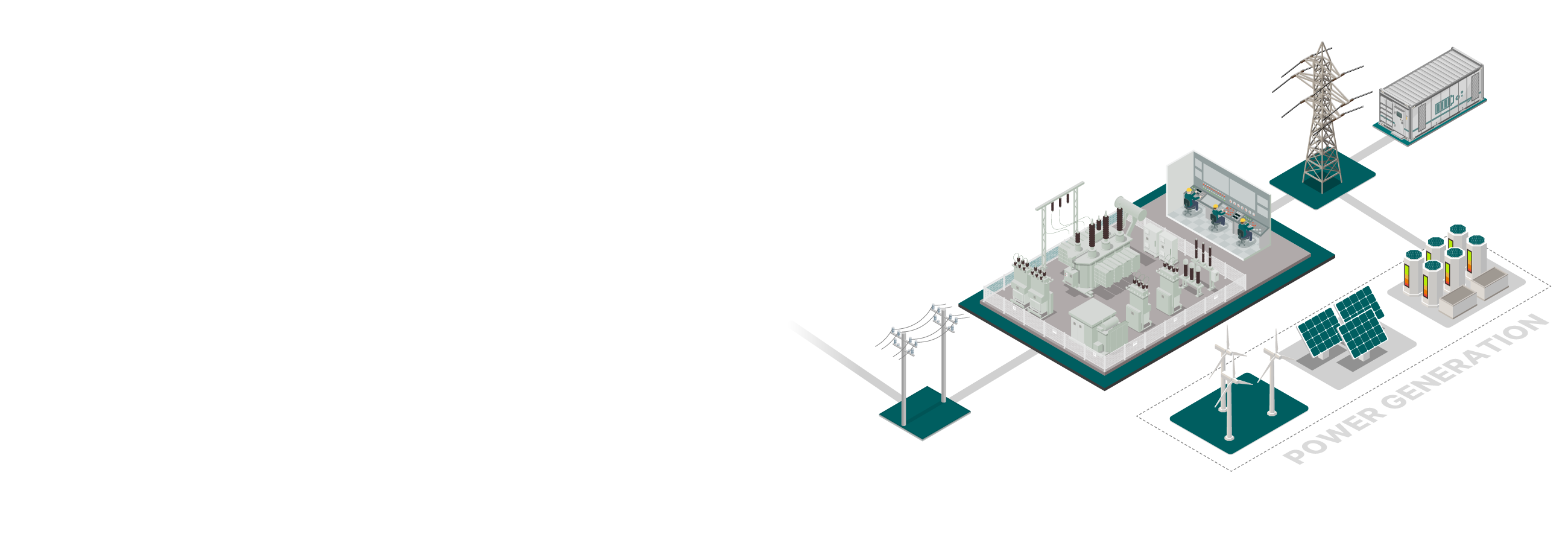
FRONT-OF-THE-METER
Back
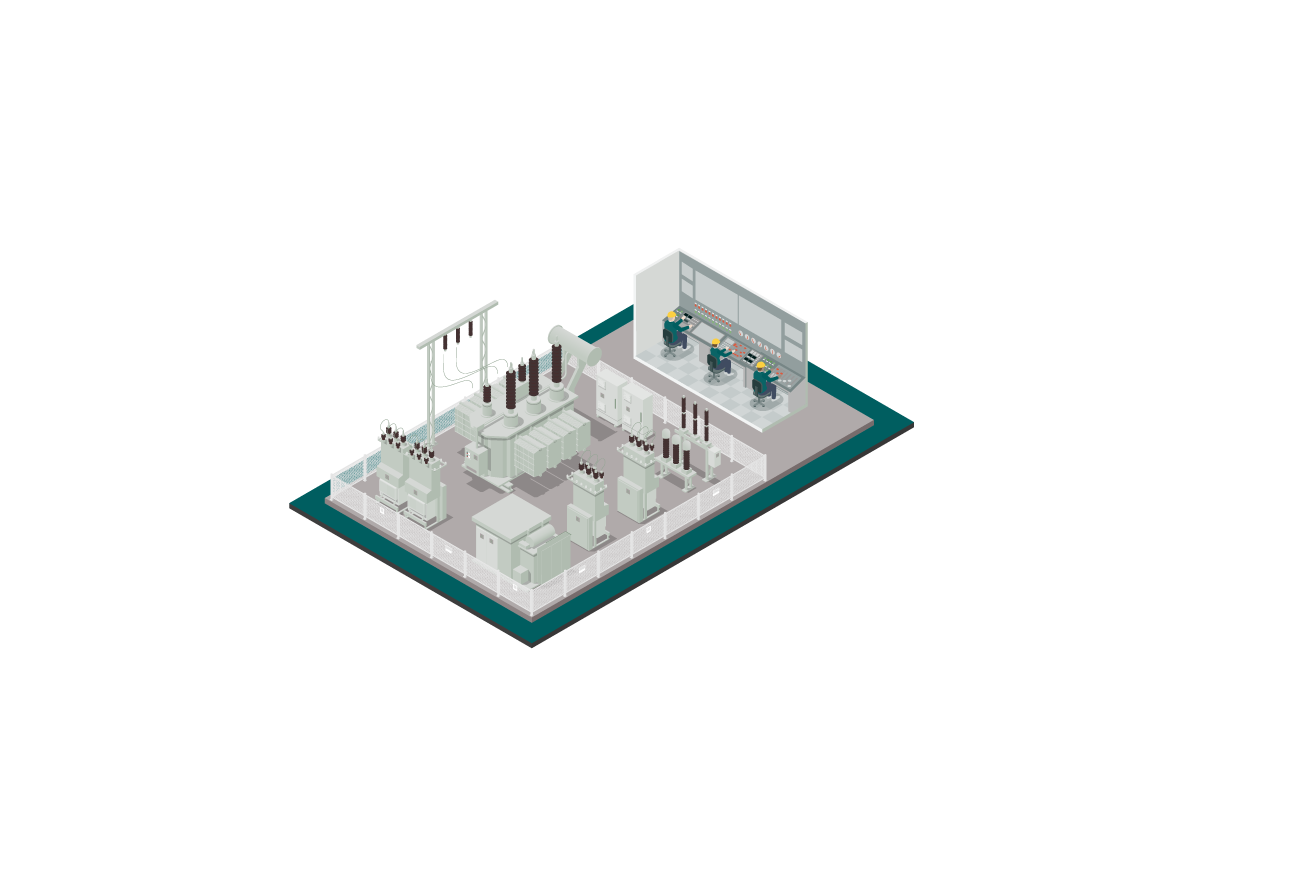
Turnkey substation
GE Vernova’s Grid Solutions business offers comprehensive project services covering the full scope of engineering and design for high-voltage data center substations. Through flexible service agreements, we collaborate with data center operators and utility providers to optimize data center electrical infrastructure and maximize the performance of their substations and network assets. Our approach ensures efficient data center power management, balancing performance, investment, and predictable costs.
Back
High-voltage equipment
Grid Solutions at GE Vernova provides a complete range of high-voltage equipment for data center substations Our GRiDEA portfolio features SF6-free switchgear to help both utilities and data centers decarbonize their operations. Our extensive portfolio range spans power and distribution transformers to circuit breakers; disconnectors (switches); instrument transformers; to monitoring devices and associated asset performance management.
Back
Digital Substation
Enhance system awareness and improve reliability by converting analog data to digital with GE Vernova’s digital substation solutions.
Back
Energy Storage
As data centers look to make their operations more sustainable, GE Vernova's Energy Storage Solutions can help you increase the dispatchability and predictability of renewables on both sides of the meter.

Click for details
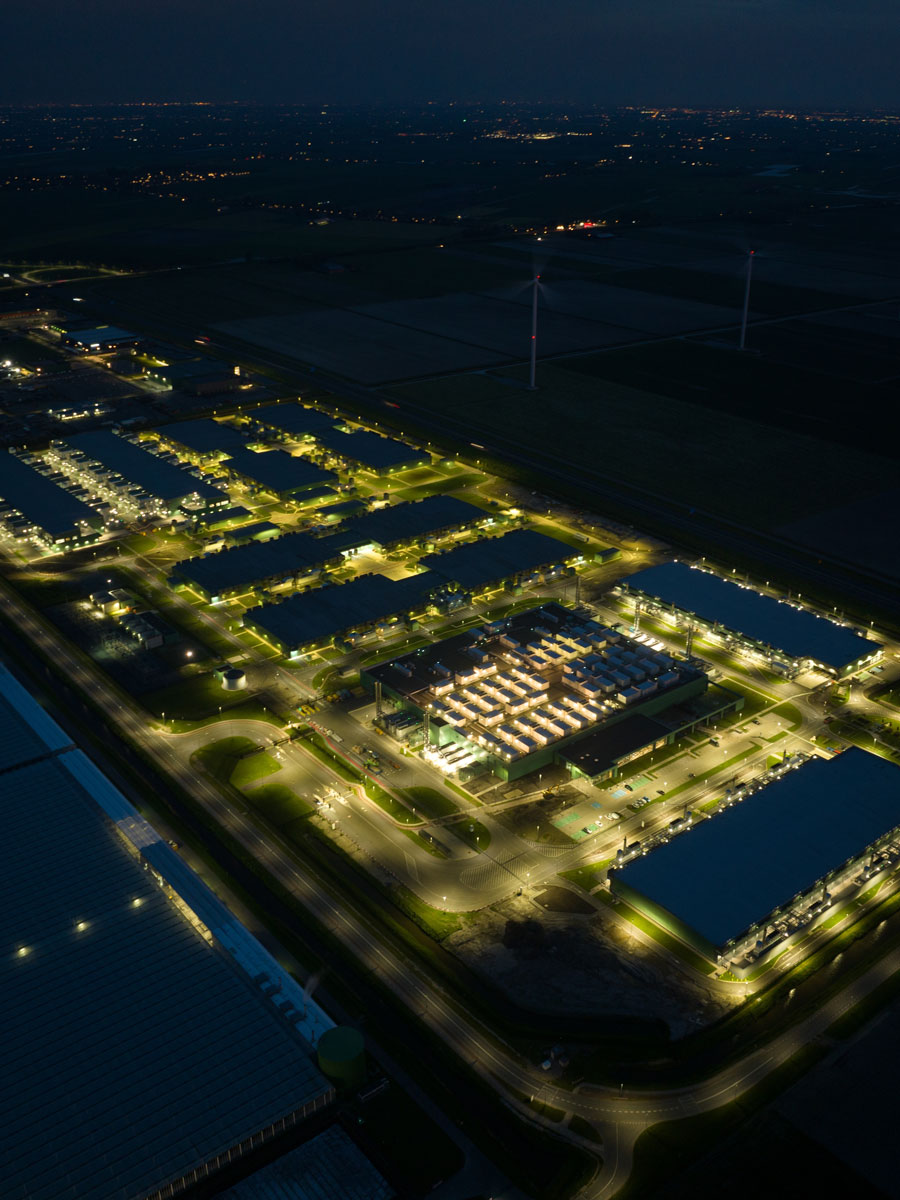
AI Factory AC Power Architectures
Proven AC power architectures for AI data centers, optimized for grid-connected, islanded, and hybrid operation within today’s interconnection and infrastructure constraints.
800 VDC Power Architectures for AI
Next-generation DC distribution pathways designed for extreme AI power density.

Project
GE Vernova’s Grid Solutions business provided critical electrical infrastructure in the development of QScale’s Q01 Campus, including a double busbar substation that can deliver 142 MW of capacity and is powered by nearly 100% renewable energy.
Technology
- DT1-145 Dead Tank Circuit Breakers
- CGVB-08 145 kV vertical break disconnectors, including a DWatch smart operating mechanism
- OTCF oil-filled coupling capacitor voltage transformers
Customer Story
DELIVERS CRITICAL INFRASTRUCTURE IN THE DEVELOPMENT OF A HYPERSCALE DATA CENTER IN AUSTRALIA
Learn More
Project
Delivery of a substation to power the data center from a 132 kV grid.
Technology
Complete 132/22 kV AIS substation comprising incoming underground cables, AIS bays, power transformers, switchboards, and prefabricated control rooms, as well as full protection, metering, SCADA, and auxiliary power systems.
Customer Story
DIGITIZATION UNDERWAY AS GE VERNOVA’S GRID SOLUTIONS BUSINESS WORKS IN SUPPORT OF LARGE-SCALE DATA CENTER DEVELOPMENT
Learn More
Project
Grid Solutions at GE Vernova, in partnership with a client, is working on the grid connection of a major hyperscale data center. The project is set to include a new 110/10 kV substation involving installation, testing, and commissioning and has an estimated completion date of end of 2024.
Technology
A new high-voltage turn-key 110/10 kV substation, triple busbar, 19 bays, 10 kV AIS double busbar, two 110 kV earth fault neutralizers, and two 10 kV earth fault neutralizers. Grid Solutions at GE Vernova will also provide civil works, protection and control systems, metering solutions, along with advisory services.

1/0
Learn more about electrification solutions for data centers
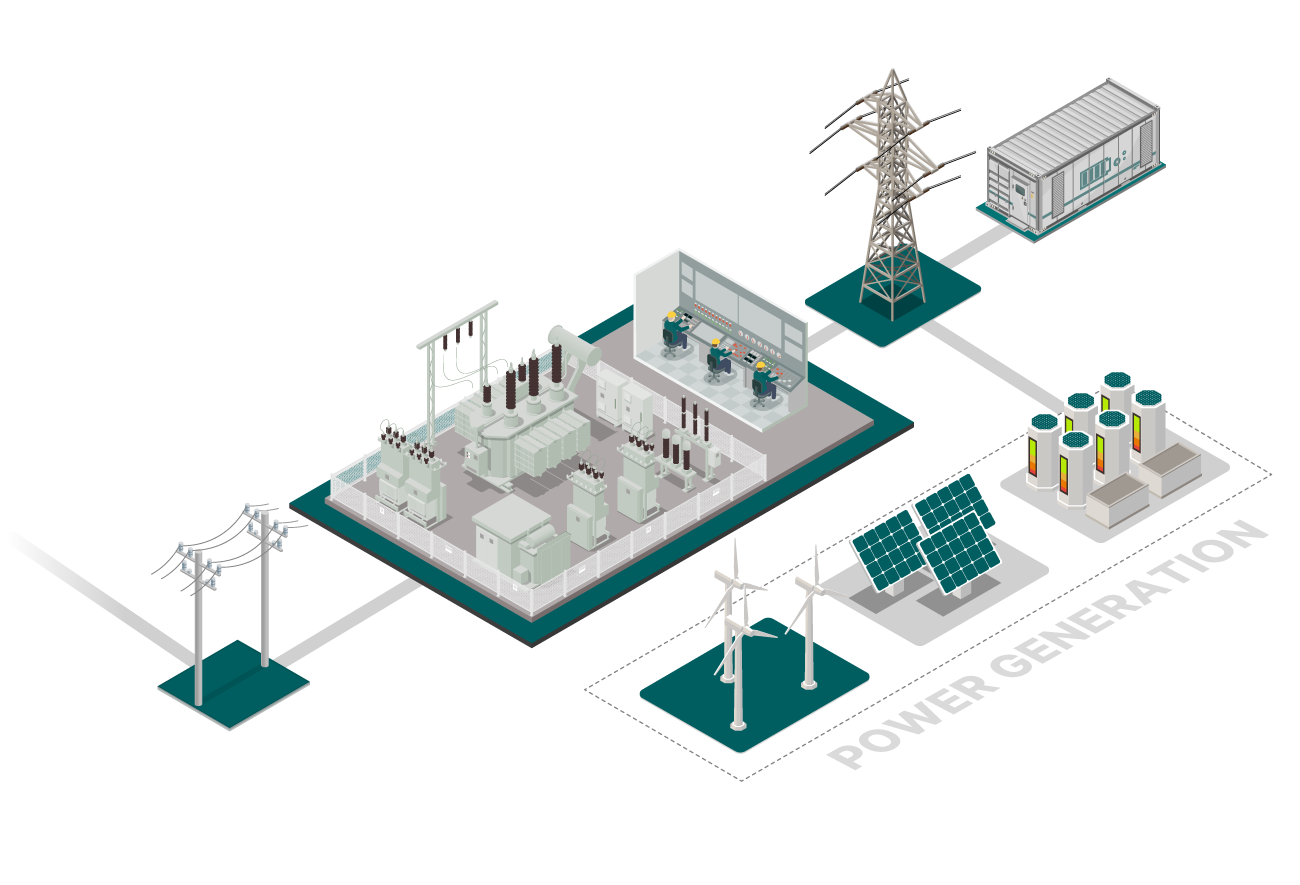
In Front-of-the-Meter:
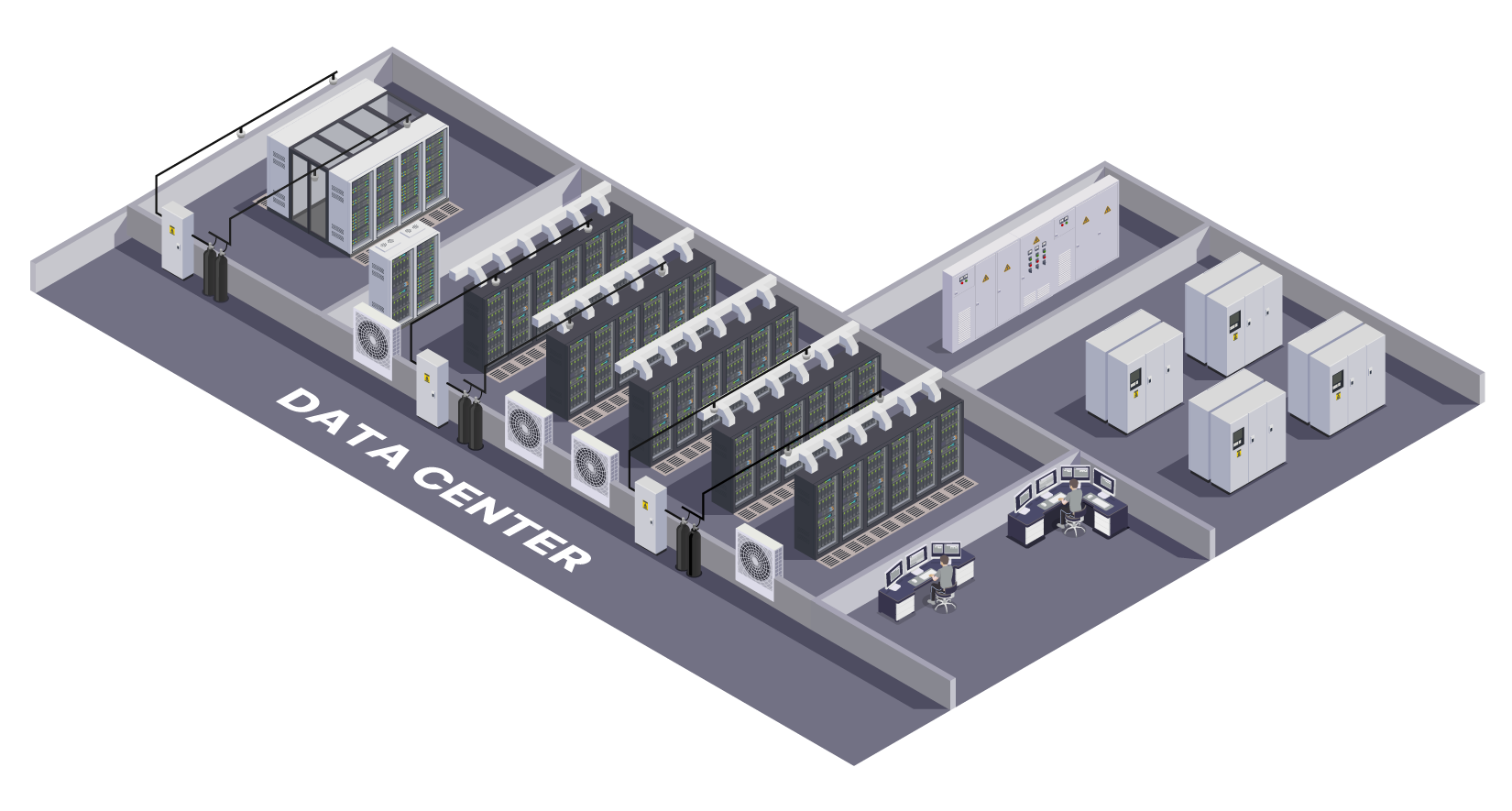
This refers to the electricity usage a data center consumes directly from the utility grid, before passing through the energy meter. Data centers purchase power at standard commercial rates and rely on the grid for consistent power, with limited control over energy sourcing and pricing.
Behind-the-Meter:
This involves data center energy management and power generation systems located within the facility, independent of the grid. Data centers may use renewable energy, batteries, or backup power systems for greater control over energy usage, leading to cost savings and improved resilience during outages.
Key Distinctions:
- Energy Source: "In front-of-the-meter" uses grid power "behind-the-meter" uses internal energy systems.
- Control: Data centers have more autonomy with "behind-the-meter" energy management, while "in front-of-the-meter" relies on external sources.
- Cost Efficiency: "Behind-the-meter" systems can optimize power consumption, bypass utility fees, and improve sustainability through renewable energy and backup power solutions.
Combining both strategies can improve energy management and reliability, depending on the data center’s location and access to power infrastructure, such as a data center substation.
Learn more about GE Vernova’s solutions for both front-of-the-meter and behind-the-meter
Data centers can power their operations more sustainably by optimizing electricity usage through advanced energy management systems, such as integrating renewable energy sources like solar or wind. Implementing data center electrical infrastructure with backup power options, like batteries, improves reliability while reducing reliance on the grid. Combining on-site generation with grid power from a data center substation balances sustainability and reliability for continuous operations.
Islanded microgrid solutions allow data centers to operate independently from the grid, using on-site generation to manage data center power autonomously, further enhancing sustainability. GE Vernova's microgrid solutions can help lower you blended levelized cost of energy (LCOE) and generate added revenue.
Grid congestion can negatively impact data centers by limiting the availability and stability of data center power. This can lead to an increased risk of downtime, higher energy costs and could limit the expansion of a data center.
Increased Risk of Downtime: Grid congestion can lead to power interruptions or reduced availability, directly impacting data center reliability and uptime. Even short disruptions can be costly and affect service quality.
Higher Energy Costs: Congestion often leads to increased electricity prices due to limited transmission capacity and higher demand, driving up operational expenses for data centers.
Delayed Expansion: Data centers relying on congested grid areas may face delays in expanding operations or connecting new facilities due to limited power availability and regulatory constraints. Grid congestion can also limit the ability of data centers to incorporate renewable energy sources, as excess generation might not be effectively transmitted or used.
STATCOM systems mitigate these challenges by providing real-time reactive power compensation, stabilizing voltage levels, and improving overall power quality. GE Vernova’s FACTSFLEX GFMe grid-forming STATCOM solution can be used to smooth the high variable load of data center. This improves the network quality and mitigates impact of congestion to the data centers. It also enhances the grid's ability to handle higher power loads and supports the integration of renewables, helping data centers maintain reliable, efficient operations even in congested areas.
Power quality issues, such as voltage sags, surges, and harmonic distortions, can significantly impact data centers by causing equipment malfunctions, system failures, and unplanned downtime. Poor power quality increases wear on equipment, reduces efficiency in energy management, and may trigger the use of the data center’s backup power.
Grid energy storage solutions can help address these issues by providing rapid-response power conditioning and backup energy support. They stabilize voltage levels, mitigate fluctuations, and ensure consistent power delivery, enhancing the reliability and resilience of data center operations.
Maintaining stable voltage levels is crucial for consistent performance. Medium voltage STATCOM (Static Synchronous Compensator) solutions help by providing real-time reactive power support and voltage regulation. This ensures stable power quality, optimizes the integration of on-site generation, and maintains reliable operation even during load changes or grid disturbances.
Learn more about GE Vernova's Medium Voltage STATCOM Learn more about GE Vernova’s TCR solutions
A microgrid benefits data center operations by providing localized control over data center electricity usage, improving data center energy management and reducing dependency on the main grid. It ensures reliable power by incorporating renewable energy sources and offering efficient data center backup power during outages. Additionally, integrating with a data center substation, a microgrid enhances power reliability and sustainability, lowering operational costs and increasing resilience.
A critical element of microgrid management load balancing between the energy produced and the energy consumed.
Data Center Market Analysis
Uncover the biggest grid challenges for AI data centers - and how to solve them fast
Scaling for the AI Era - Data Centers and the Energy Transition
Speed up AI data center deployment with turnkey substations
Data Center Solutions
Discover GE Vernova’s Grid Automation portfolio of data center solutions designed to address the ever-evolving data center landscape – with profitability, efficiency, and sustainability at the forefront.

Greening the Future Data Center Infrastructure White Paper
Read more about how data centers are relying on renewable energy for a more sustainable future.
The Data Centers AI & ML Trilemma White Paper
Learn about the role Artificial Intelligence and Machine Learning play in data center development.
Hear from our experts

As the data center market continues to expand, we continue to be seen as a partner in the data center ecosystem and continue to collaborate proactively with customers facing supply chain challenges. GE Vernova is committed to helping accelerate data center customer project cycles and helping them stay on budget and schedule.

Claudia Blanco
Chief Innovation Officer, GE Vernova
GE Vernova has deep domain expertise to help accelerate delivery of power to data centers. The data center electrical infrastructure is critical to stable operation. Our turnkey data center substation solutions help provide a single “1-stop shop” approach eliminating project and logistical complexities of multiple vendor projects.

Mandar Pandit
Chief Strategy & Growth Officer, GE Vernova
As AI advances, data centers face rising energy demands—and the challenge of meeting them sustainably. This is why, at GE Vernova, we engage with data center operators and customers early in their journey, to understand their needs, customize solutions to electrify their assets, and solve their challenges.

Hassina Saad
Global Industry Segment Leader, GE Vernova